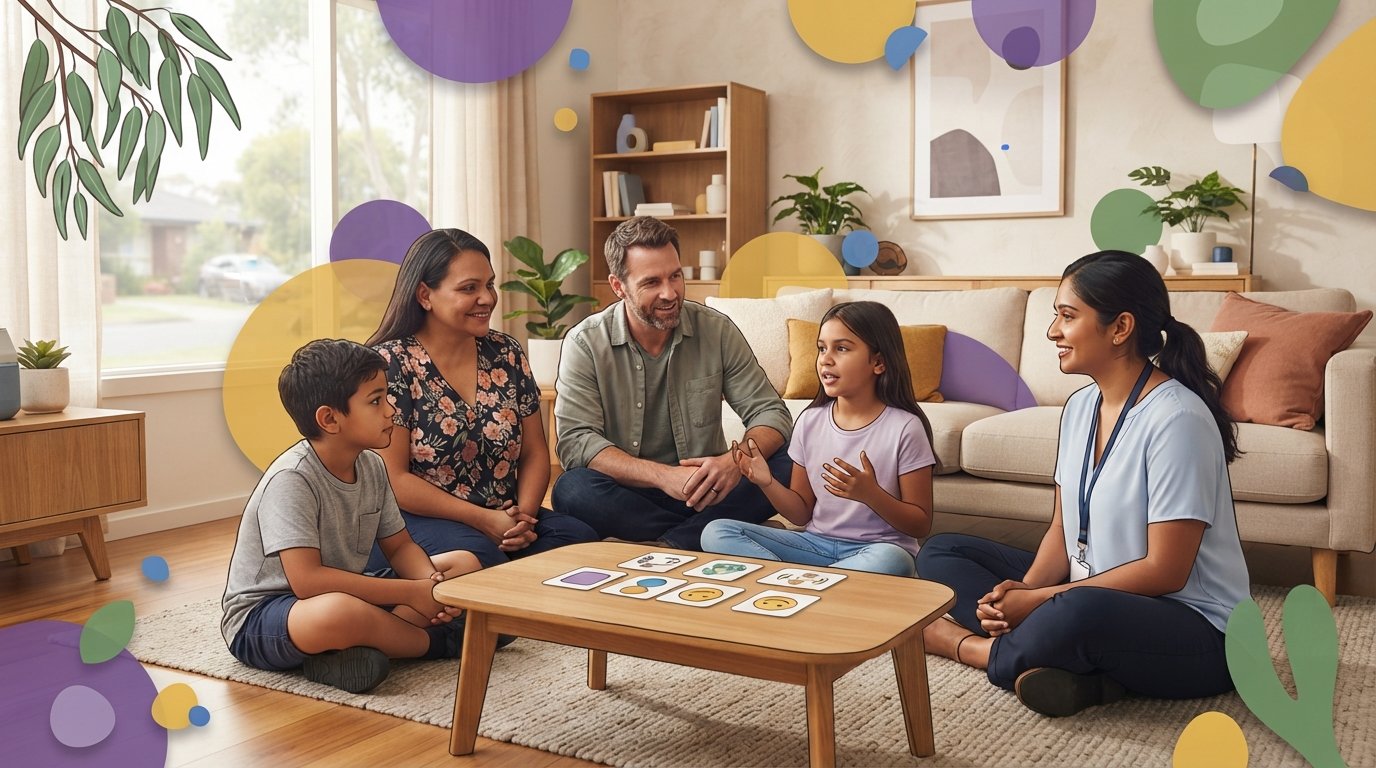
What if the “challenging behaviour” your family is navigating isn’t a problem to be fixed, but a message waiting to be understood? It’s exhausting to feel like you’re constantly walking on eggshells or facing judgment from clinical providers who don’t see the wonderful person behind the struggle. We know that when you’re looking for ndis positive behaviour support, you aren’t just looking for a thick folder of clinical reports to sit on a shelf. You want a way to bring peace back to your living room and help your loved one feel heard.
As a small, family-founded team started by Manu, we believe that true support starts with dignity and a deep respect for who the participant is. This guide explains how ndis positive behaviour support works in 2026, focusing on practical strategies that actually fit into your daily routine. We’ll skip the heavy jargon and explain things like “restrictive practices” in plain English, so you feel empowered rather than overwhelmed. You’ll learn how a consistent support team can help build independence and create a calmer, happier home environment for everyone. We’ve put this together to show you that there’s a path forward that celebrates your family’s unique personality while giving you the practical tools you need to thrive.
Key Takeaways
- Discover how to reframe challenging situations by viewing behaviour as a form of communication, focusing on dignity and quality of life rather than just compliance.
- Learn the practical steps involved in developing an ndis positive behaviour support plan that truly reflects your loved one’s unique personality and goals.
- Understand the role of specialist support coordination in managing complex needs and ensuring your entire support team works together consistently.
- Find out why having a consistent, familiar support worker is the key to successfully bringing a behaviour plan to life during daily routines and community outings.
- Explore why a small, family-focused approach provides more flexible and heart-centred care than the “one-size-fits-all” models often found in larger organisations.
What is NDIS Positive Behaviour Support (PBS)?
NDIS positive behaviour support isn’t about changing who a person is. It’s about changing the support system and environment around them so they can thrive. When a loved one uses behaviour that feels challenging or unsafe, they’re often trying to tell us something that they can’t put into words. They might be overwhelmed by a noisy room, experiencing physical pain, or just feeling frustrated that they can’t make a simple choice for themselves. By using Positive Behaviour Support (PBS), we stop looking at the person as the “problem” and start looking at how we can make their life better.
The primary goal here isn’t just to “stop” a certain action. It’s to improve their overall quality of life. The “positive” part of the name means we focus on what someone is good at and help them learn new skills to get their needs met in a safer way. It’s a human-rights-based approach that puts dignity first. We believe every person has the right to live a life free from unnecessary restrictions, and ndis positive behaviour support provides the framework to make that happen.
The Core Values of Behaviour Support
We believe that if you change the environment, you change the outcome. Instead of asking “why is this person being difficult?”, we ask “what is happening in the room or the routine that makes them feel this way?”. In the Australian NDIS landscape, person-centred planning for ndis positive behaviour support is about long-term independence. It’s not a quick fix; it’s a way to build a foundation for social inclusion. When a participant feels safe and understood, they’re much more likely to engage in social activities and feel like a valued part of their community.
Who is Involved in Your PBS Team?
Building a solid support team is essential for success. First, you’ll work with a Specialist PBS Practitioner. These professionals are the ones who conduct deep assessments and write the formal plan. They look at every detail of a person’s life to find the right path forward. Then, your support coordinator plays a vital role in bringing everyone together. They make sure the practitioner, the family, and the service providers are all on the same page and that the funding is used effectively.
Endeavour Healthcare isn’t a behaviour support practitioner, and we don’t write behaviour support plans. Our role is to put your practitioner’s plan into practice every day. We know that the real work happens with the people who are there in the home every day. Family members, carers, and dedicated support workers are the ones who turn a written document into real-world actions. Because Manu started this provider as a support worker herself, we truly understand that a clinical plan is only as good as the team implementing it. Consistency is everything. When everyone uses the same gentle, proactive strategies during a morning routine or a trip to the shops, the participant feels a sense of safety that allows them to really thrive.
How an NDIS Positive Behaviour Support Plan is Developed
Developing an ndis positive behaviour support plan is a collaborative journey that puts your family at the centre. It isn’t about a practitioner sitting in a room alone writing a report. It’s about a team effort to find out what truly makes your loved one feel safe and happy. The process follows a clear set of steps to ensure the final strategies actually work in your home and out in the community.
The Functional Behaviour Assessment (FBA), Explained Simply
The very first step is the Functional Behaviour Assessment, or FBA. Think of this as a deep dive into your loved one’s world. Instead of just looking at the behaviour itself, the practitioner looks at the “why” behind it. They’ll spend time observing, talking to you, and listening to the people who know the participant best. A Functional Behaviour Assessment is the foundational tool for any effective PBS plan. It helps identify triggers and unmet needs that might be causing distress.
Once the “why” is clear, the team moves into collaborative goal setting. We ask: what does a “good life” look like for your family? This isn’t just about reducing incidents; it’s about increasing opportunities for joy and independence. From there, the practitioner drafts the plan, ensuring every strategy is practical for real-life situations like grocery shopping or morning routines. Following the NDIS Quality and Safeguards Commission behaviour support guidelines, the plan must focus on reducing restrictive practices by offering better alternatives.
What Makes a Good PBS Plan?
A great plan is easy to read and even easier to follow. It shouldn’t be filled with clinical jargon that leaves you scratching your head. Instead, it should clearly distinguish between different types of support:
- Proactive strategies: These are the things we do every day to prevent stress, build skills, and make the environment more comfortable.
- Reactive strategies: These are the clear, safe steps to follow if a challenging situation occurs, ensuring everyone stays protected.
A good plan must reflect the participant’s unique personality, culture, and interests. If they love the footy or have a specific sensory preference, that should be right there in the document to help support workers build a real connection.
After the plan is written, the focus shifts to implementation and training. Your support team needs to learn exactly how to use these strategies consistently. We then review and refine the plan regularly. Under current rules, a comprehensive plan must be submitted within six months of starting and reviewed at least every 12 months to stay effective. At Endeavour Healthcare, we’re passionate about supporting families through this process with a personal touch that larger organisations often miss.
Specialist Support Coordination: Navigating Complex Needs
Sometimes, life with a disability involves more than just a few support workers and a therapist. If you’re managing multiple health systems, dealing with the justice system, or facing frequent crises at home, you might need a higher level of help. This is where Specialist Support Coordination (Level 3) comes in. It’s designed for exceptionally complex situations where standard coordination isn’t quite enough to resolve the barriers you’re facing.
A specialist coordinator works to ensure your ndis positive behaviour support plan doesn’t just exist on paper. They manage the moving parts of a large team, making sure that every provider is working toward the same goals. This is particularly important when there are high risks involved. Their job is to reduce the complexity of the system so your family can focus on what matters: your loved one’s wellbeing.
When is Specialist Support Coordination Required?
You might see this funding in a plan if there are unstable housing situations, dual diagnoses, or complex family dynamics that make it hard to maintain consistent care. While a standard coordinator helps you find services, a specialist coordinator actively works to resolve systemic issues. They help navigate high-risk environments and ensure that crises are managed safely and effectively. They also focus on building your family’s capacity, helping you gain the skills needed to manage these supports more independently over time.
The Synergy Between Coordination and PBS
For ndis positive behaviour support to be successful, everyone needs to be “singing from the same songbook”. The specialist coordinator ensures the practitioner and the daily support workers are aligned. They also keep a close eye on the NDIS budget. It’s their role to ensure there’s a healthy balance between funding for the specialist practitioner who writes the plan and the direct care hours needed to put those strategies into practice. A specialist coordinator acts as the “glue” in a complex support team, holding the practitioner, the support workers, and the family together.
At Endeavour Healthcare, we see this collaboration as essential. We aren’t a massive corporation; we’re a small, support-worker led team that values clear communication. We work hand-in-hand with specialist coordinators to ensure our in-home support is perfectly aligned with the PBS plan. When the people providing daily care understand the “why” behind the strategies, the participant experiences a much more stable and predictable environment.

Implementing PBS in Daily Living and Community Access
A behaviour support plan shouldn’t just sit in a drawer or live as a file on a computer. It’s a living tool designed to help your loved one navigate the world with more confidence. When we talk about implementing ndis positive behaviour support, we’re talking about the practical, everyday moments: getting ready in the morning, catching a bus, or visiting a local park. It’s the support worker’s job to take the practitioner’s clinical advice and turn it into real-world actions that feel natural and supportive.
PBS at Home: Creating a Calm Environment
The home should be a sanctuary, not a source of stress. Sometimes, small changes to the environment make a massive difference in how someone feels. Our team looks at triggers like loud noises, bright lights, or even just a cluttered hallway that might cause sensory overload. During assistance with daily living ndis, our support workers help maintain these environmental adjustments while assisting with daily tasks.
We also focus heavily on psychosocial support. This isn’t just about doing tasks for someone; it’s about helping them build the emotional tools to manage their own feelings. By following the PBS plan’s proactive strategies at home, we help participants feel more in control of their day. This sense of predictability naturally reduces anxiety and the need for “behaviours of concern,” leading to a much more peaceful household for the whole family.
Confidence in the Community
Heading out into the community can be overwhelming for many participants. We use tools like visual schedules or social stories to help them know exactly what to expect before they leave the house. If a trip to the shops usually causes distress, we might tailor transport assistance to avoid busy times or use a quieter route to keep things calm. These small adjustments ensure that community access remains a positive experience.
Community access is where we see the biggest wins for independence. Whether it’s joining a local footy club or just enjoying a coffee at a local cafe, these outings build self-esteem and reduce isolation. We celebrate every small win, like staying at a social event for ten minutes longer than last time. These moments show the participant that they can engage with the world on their own terms, building their capacity to socialise with genuine confidence.
Consistency is the key to all of this. At Endeavour, we know that having the same support worker matters. When a worker knows your loved one’s subtle cues and triggers, they can step in early with a calming strategy before a situation escalates. Because our founder, Manu, spent years as a support worker, she built this provider to prioritise these deep, personal relationships over generic clinical templates. If you’re ready for a team that treats your family like people rather than a case number, contact Endeavour Healthcare to discuss your support needs.
Why a Personal, Support-Worker Led Approach Matters
Large organisations often rely on rigid templates that look impressive on paper but fail in the living room. These clinical documents frequently miss the subtle nuances of a person’s life, such as how they prefer their morning tea or what music helps them feel calm. At Endeavour Healthcare, we believe that ndis positive behaviour support only works when it’s built around your real life, not a corporate schedule. We aren’t interested in one-size-fits-all solutions. We know that every family has a different rhythm that deserves respect.
The Endeavour difference comes from our roots. We were founded by Manu, who spent years on the front line as a support worker. She saw firsthand how plans can fail if they don’t account for the daily reality of the participant and their family. Our approach is grounded in that practical experience. We focus on providing safe, respectful, and culturally responsive care that treats people as individuals, not as cases to be managed. This front-line perspective ensures that our strategies are always practical and easy to implement.
The Value of a Small, Dedicated Team
One of the biggest benefits of choosing a boutique provider is direct access. You won’t be put through to a call centre or find yourself speaking to a different manager every month. Instead, you have a direct line to decision-makers like Manu. Because our team is small and tight-knit, we can be incredibly agile. If a participant’s situation changes suddenly, we don’t need to wait for a board meeting to adjust our approach. We can pivot our support immediately to meet the new need. This responsiveness is vital for creating a stable environment where a participant can truly flourish. We build genuine relationships that go far beyond a standard service agreement, focusing on human connection above all else.
Starting Your Journey with Endeavour
When we begin work with a new family, we take the time to match support workers to the participant’s personality and specific PBS needs. We look for common ground, whether it’s a shared love of the outdoors, a particular hobby, or a similar sense of humour. This matching makes the ndis positive behaviour support strategies feel like a natural part of the day rather than a forced clinical routine. It helps build the trust necessary for long-term success and greater independence.
Our commitment to the NDIS Quality and Safeguards Commission standards means you can trust that our care is consistently high-quality and safe. We take our responsibilities seriously, ensuring that every worker is fully trained in the specific strategies outlined in the behaviour plan. You are not alone in this journey. We understand the weight of managing challenging situations at home, and we’re here to help shoulder that burden. Our goal is to support your family’s vision for a “good life,” providing the consistent, heart-centred care that makes those goals a reality.
Creating a Calmer Home and a Brighter Future
Disability support can feel like a lonely journey, but it doesn’t have to be. We’ve looked at how positive behaviour support is really about listening to what a person needs and creating an environment where they feel safe to grow. By focusing on dignity and building new skills, your family can move away from constant crisis management and toward a more peaceful, predictable daily routine.
At Endeavour Healthcare, we bring a personal touch to everything we do. As a support-worker led team founded by Manu, we prioritise culturally responsive care and have deep expertise in psychosocial and community support. We don’t believe in corporate templates; we believe in people. Whether you’re navigating complex coordination or looking for consistent in-home assistance, we’re here to help you build independence on your own terms. You deserve a support team that sees the person, not just the paperwork. Contact Endeavour Healthcare today to discuss a personal approach to your NDIS support. We’re ready to help you reach your goals with the care and respect your family deserves.
Frequently Asked Questions
Does NDIS positive behaviour support involve medication?
PBS itself does not involve prescribing medication, as it is a non-clinical framework focused on environmental changes and skill-building. While some participants may take medication prescribed by their GP or psychiatrist, the role of ndis positive behaviour support is to find proactive ways to meet a person’s needs through communication and routine. We focus on understanding the “why” behind a behaviour rather than using clinical interventions to manage it.
What are “restrictive practices” and how does PBS help reduce them?
Restrictive practices are actions that limit a person’s rights or freedom of movement, such as seclusion or physical restraint. A core goal of ndis positive behaviour support is to safely reduce and eventually eliminate these practices. By identifying triggers and teaching new communication skills, we create an environment where these restrictions are no longer needed. This approach ensures the participant’s dignity is always the top priority in their support plan.
Can I choose my own PBS practitioner and support workers?
You absolutely have the right to choose who comes into your home. At Endeavour Healthcare, we believe the relationship between the participant and their support worker is the most important part of the plan. We focus on matching workers based on personality and interests, ensuring they have the right skills to implement the strategies. Having a consistent team you trust makes the plan much more effective and helps build long-term independence.
How long does it take to see results from a PBS plan?
Positive behaviour support isn’t a quick fix or a clinical cure. It’s a long-term approach to improving quality of life. Some families notice a calmer home environment within a few weeks of starting proactive strategies, while other goals might take months of consistent work. Because we focus on building new skills and changing environments, the results are designed to be sustainable, helping the participant feel more confident and secure in their daily routines.
What if the PBS plan is not working for our family?
If a plan isn’t delivering the outcomes you hoped for, it can be reviewed and refined at any time. NDIS rules require formal reviews every 12 months, but as a small, dedicated team, we can pivot much faster if something isn’t clicking. We encourage open communication between families, practitioners, and workers. If a strategy feels impractical or isn’t helping, we work together to find a better way that fits your real life.
How do I get funding for positive behaviour support in my NDIS plan?
Funding for behaviour support usually falls under the “Capacity Building – Improved Relationships” category of your NDIS plan. To get this included, you generally need to provide evidence to the NDIA that there are behaviours of concern that impact the participant’s safety or community participation. A support coordinator can help gather this evidence, such as reports from therapists or incident logs, to ensure the right level of funding is allocated for a practitioner.
Is specialist support coordination different from standard support coordination?
Specialist support coordination (Level 3) is designed for situations involving high risks or exceptionally complex needs, such as dual diagnoses or unstable housing. While a standard coordinator helps you find and connect with services, a specialist coordinator focuses on resolving systemic barriers and managing a larger team of providers. They act as the “glue” that holds the support team together, ensuring the ndis positive behaviour support plan is implemented consistently across all areas.
Can PBS help my child attend school or community activities?
Yes, these strategies are incredibly helpful for increasing community access and social inclusion. We use tools like visual schedules or social stories to help participants prepare for the sensory challenges of a school day or a trip to the shops. By building emotional regulation skills and providing tailored transport assistance, we help participants engage in hobbies and socialise with confidence. These small wins in the community significantly reduce isolation and build genuine self-esteem.
Leave a Reply