What if the right support isn’t the one with the most familiar label, but the help that fits your everyday life? Psychosocial support, support coordination and recovery coaching can sound similar, especially when you’re working out who can help with what.
If you’re unsure where practical support ends and coordination or coaching begins, you’re not alone. The names can overlap, but each service has a different focus. What matters is finding support that respects your choices and connects with the goals you want to work towards.
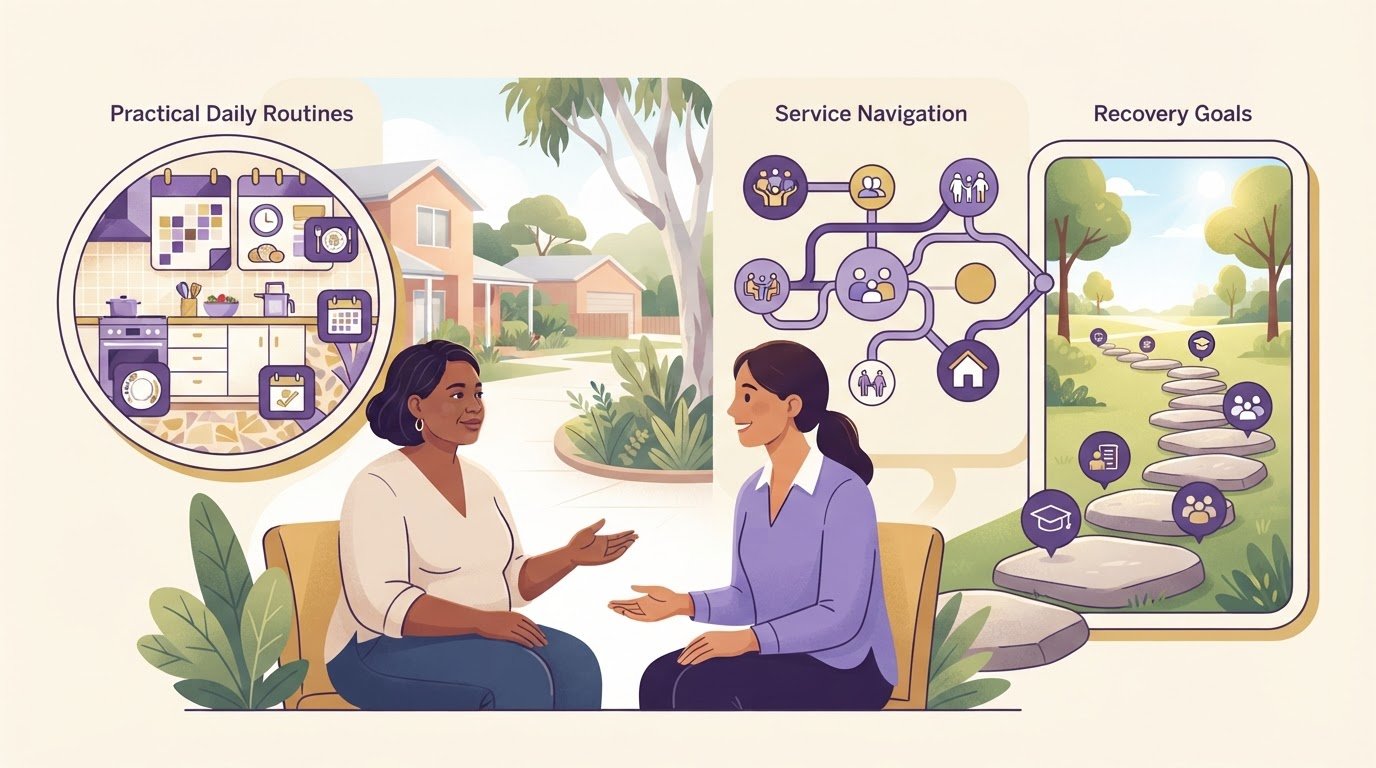
This guide explains how these common NDIS support options differ. You’ll learn what psychosocial support may look like in daily routines and community life, how support coordination can help you connect with services, and how recovery coaching can support recovery goals. You’ll also find questions to ask when comparing providers, so you can discuss what may suit your circumstances.
Key Takeaways
- Psychosocial support can focus on practical help with everyday routines and community participation. Other options may focus on coordinating services or working towards recovery goals.
- Start by identifying the day-to-day support you want, then compare services by their purpose and the tasks they can help with.
- Check your NDIS plan details and ask how a service may fit your goals before deciding what support to explore.
- Ask providers about their approach, consistency and how they’ll shape support around your preferences and routines.
- You can include a trusted family member or supporter in the conversation if you choose, and agree on next steps that feel right for you.
What does psychosocial support look like in everyday life?
Are you looking for practical help that respects your choices and fits the way you want to live? Psychosocial support can look different for each person. It may focus on making everyday routines, daily tasks or community participation more manageable for you.
Psychosocial support is practical assistance that can help you manage the day-to-day effects of psychosocial disability and work towards goals you choose. In the NDIS, supports relate to the impact of disability on everyday functioning, rather than clinical treatment for a mental health condition. They should be guided by your preferences, routines and goals, not a standard set of activities.
What might psychosocial support help with day to day?
The right support depends on what you want help with. You might discuss breaking a daily task into manageable steps, building a routine that works for you, or getting support to take part in a community activity. Someone else may have different priorities, or may not want help with those activities at all.
When speaking with a provider, name the task or situation you want to work on. For example, explain whether you want someone alongside you while you practise a task, or practical help to take part in an activity. You can also discuss how support could fit into your day and whether it still feels useful as your priorities change. The aim is to work alongside you, not take over or assume what you need.
This practical approach is related to ideas explored through psychosocial rehabilitation, which considers participation and functioning in community life. NDIS-funded support is not a replacement for clinical care, such as treatment provided through the health system.
How does psychosocial disability relate to support?
Psychosocial disability describes how the effects of a mental health condition may make parts of everyday life harder. People’s experiences, strengths and support needs vary, so a diagnosis alone doesn’t explain what help someone wants or what their day looks like.
For example, you might want support with a particular daily task or with joining an activity in your community. The starting point is your experience and goals, not a label. You can read our plain-English guide to psychosocial disability for more context.
Whether a particular support can be included in your NDIS plan depends on your circumstances and plan. Check current NDIA guidance for plan-specific questions, or speak with the relevant person supporting you with your plan.
Psychosocial support, recovery coaching and support coordination compared
The names can sound alike, and all three options may connect with your goals. A useful way to tell them apart is to ask what kind of help you need: practical assistance with everyday life, help connecting and coordinating supports, or coaching focused on recovery goals.
| Option | Purpose and typical focus | Example tasks to discuss | Questions to ask |
|---|---|---|---|
| Practical psychosocial support | Hands-on help with daily living or taking part in the community. | Support with a daily task, an errand or attending a community activity. | What would you help me with, and how can I guide the way it’s done? |
| Support coordination | Helping you understand and connect the supports in your plan, and work with providers. | Discussing which services may fit your goals or helping you connect with providers. | How will you help me connect with supports and build my confidence to coordinate them? |
| Psychosocial recovery coaching | Working alongside you on recovery goals and connecting with relevant supports. | Discussing what matters to you, setting recovery-focused goals and identifying supports to explore. | How do you work with my goals, preferences and existing supports? |
These options can share a broad aim, such as supporting your participation in everyday life, but they are not interchangeable. The examples above are topics to discuss, not a promise that every provider offers them or that they’ll suit your plan. Check current NDIA guidance and your plan for details about the supports available to you.
What does practical psychosocial support from a support worker involve?
Practical support may involve working alongside you with daily living tasks or community participation. Depending on your goals, you could discuss help with an errand, getting ready for an activity or practising a task you want to do more independently. These are possibilities, not guaranteed outcomes. You should have a say in what happens and how support is provided.
Endeavour Healthcare offers psychosocial support alongside in-home, daily living and community support. If you’re considering practical help of this kind, you can explore Endeavour’s support options.
How are recovery coaching and support coordination different?
Support coordination helps you connect with services and organise supports around your plan. It isn’t managing your funding or money. Psychosocial recovery coaching is more specifically centred on your recovery goals and building your capacity to manage day-to-day challenges and connect with supports. Both should work with your choices, and neither is clinical treatment.
Ask each provider to explain their role in relation to your goals and plan. Endeavour offers support coordination, but this is separate from practical support and doesn’t mean the provider offers recovery coaching.
How can you tell which psychosocial support option may suit you?
Start with the person, not the service label. Think about what you want your everyday life to look like, which routines matter to you and where you’d like practical help. This can help you distinguish support with day-to-day activities from help connecting services or understanding plan arrangements.
Which questions can help clarify the kind of support you want?
Picture a good week for you. What would be happening, and what feels difficult to manage right now? Your answers can help show whether you’re mainly looking for practical assistance, support to take part in community activities, help coordinating services, or a mix of these.
It can also help to think about how you want support to feel. Consider your preferences, boundaries and communication needs, such as how you like information explained or how much choice you want over each activity. You don’t need to have everything worked out before asking a provider questions.
What should you compare when speaking with providers?
Use this checklist to keep conversations focused on what matters to you:
- Role: What service are you discussing, and what is its main purpose?
- Tasks: What could the support person help with, and what would remain outside the service?
- Communication: Who will you speak with, and how will you share feedback or changes in your needs?
- Personal fit: How will the provider learn your preferences, routines and goals?
- Plan fit: Does your current plan include funding for the support you’re asking about?
Also ask who would provide the support and how the provider approaches communication and familiarity. Check that the service being discussed is one they actually offer, and ask them to explain anything that’s unclear. A useful conversation should leave you feeling heard, not rushed into a decision.
Your NDIS plan and circumstances determine which supports may be available to you, so don’t rely on a general comparison to decide what you qualify for. Check your plan and current NDIA guidance for plan-specific questions. For more ideas to take into provider conversations, read our guide to choosing an NDIS service provider.

What should you ask before starting psychosocial support?
A first conversation can feel easier when you have a few points to guide it. You don’t need a perfect plan. Start with what matters to you, then check whether the service, provider and plan details line up.
How can you prepare for a first conversation about support?
Try this simple sequence before deciding what to do next:
- Identify your priorities. Note what’s working, what feels hard to manage and what you’d like everyday life to look like. You might also record preferred routines and the kind of practical help you want to explore.
- Check your plan details. Bring the relevant information from your NDIS plan and ask how the proposed service relates to it. Don’t assume a particular support is funded or that you’re eligible for it. Check plan-specific questions with the NDIA or someone who supports you with your plan.
- Discuss the fit. Ask how the provider will listen to your preferences and adapt respectfully. Talk about communication, boundaries, familiar support workers and what might happen if your routine changes.
- Agree on next steps. Make sure you understand what service is being discussed, who you’ll hear from and how you can ask questions before support begins.
You can bring a trusted family member or supporter if you choose. The conversation should still centre on the participant’s wishes, with space for them to speak and make choices in the way that works for them.
How can you review whether the support feels right?
Before support starts, ask how you can share feedback or raise a concern comfortably. Agree on how you’ll check in together and whether there’s a particular person you can contact if something doesn’t feel right.
As you go, consider whether the support still connects with your goals and preferences. Does the approach respect your routine? Do you feel listened to when you ask for a change? These conversations can help you and the provider decide whether anything needs adjusting.
If you’re considering practical help with everyday tasks, our guide to NDIS assistance with daily living may help you prepare. If you’d like to talk through Endeavour Healthcare’s support options, get in touch to discuss what you’re looking for.
How Endeavour Healthcare approaches person-centred psychosocial support
Endeavour Healthcare is a small NDIS provider offering psychosocial, in-home and community support. The team shapes support around your circumstances and goals, rather than expecting you to fit a set programme.
Manu founded and directs Endeavour Healthcare. The team’s approach is centred on building respectful relationships with support workers and shaping care around each participant’s real life and goals.
What can a tailored support conversation cover?
You can start by talking about what matters in your everyday life. That might include your goals, preferred routines, the practical support you’re looking for and how you’d like support to be provided. You can also share what feels comfortable, what doesn’t, and any communication or cultural preferences you want the team to understand.
If it suits your needs, you can discuss whether in-home support or help with community participation may fit into your routines. The conversation is a chance to explain what you’re looking for and ask clear questions about the services Endeavour offers. It doesn’t confirm NDIS eligibility or funding, and it can’t guarantee a particular outcome or service arrangement.
You remain central to the discussion. A family member or other trusted person can join if you choose, while your own preferences and decisions guide the conversation.
How can you take a comfortable next step?
You don’t need to have every detail sorted before asking about support. Bring your questions, explain what you hope to make easier and check that the service being discussed matches what you’re seeking. If you have questions about your NDIS plan, check the details with the NDIA or the appropriate person supporting you with your plan.
Endeavour can discuss its psychosocial, in-home and community support options with you. For questions about plan management or the financial administration of NDIS funding, speak with a separate registered plan manager, as Endeavour doesn’t provide that service.
If you’d like to talk through whether Endeavour’s available support could suit your needs, you’re welcome to talk with Endeavour Healthcare. You can ask questions and take the conversation at a pace that feels comfortable.
Choose support that fits your everyday goals
The names of NDIS supports can overlap, but their focus differs. Practical psychosocial support may help with everyday activities and community participation, while support coordination helps connect services and recovery coaching focuses on recovery goals. Start with the help you want, then ask providers about their role, approach and fit with your plan.
Endeavour Healthcare is a small provider founded and directed by Manu. The team offers psychosocial support alongside in-home, daily living and community-based support, shaped around each person’s circumstances and goals.
If you’re weighing up practical support options, you’re welcome to talk with Endeavour Healthcare about support that fits your everyday life. Asking questions is a useful first step, and you can take the time you need to decide what feels right for you.
Frequently Asked Questions
Is psychosocial support part of the NDIS?
Psychosocial support may be relevant to your NDIS plan, depending on your circumstances and the supports included in your current plan. The term can describe different kinds of practical or capacity-building assistance, so ask the provider to explain exactly what they mean. For questions about your own plan, check current NDIA information or speak with the appropriate NDIS contact.
What is the difference between psychosocial support and recovery coaching?
Psychosocial support is a broad phrase for assistance connected with everyday life and personal goals. Psychosocial recovery coaching is a specific support role, so the terms aren’t interchangeable. Ask what the service involves, who will provide it and how it relates to your goals and plan. For the formal role description, check current NDIS guidance before making a decision.
Can a support worker provide psychosocial support?
A support worker may provide practical assistance with daily routines, daily living or community participation, depending on the service and agreed support. That doesn’t mean the worker provides clinical care or a specialist service. Ask the provider to explain the tasks, boundaries and approach, and check whether they fit what you’re looking for and the supports in your plan.
How do I choose between psychosocial support and support coordination?
Start with the help you want. If you’re looking for practical assistance with everyday activities or community participation, ask about psychosocial support services. If you need help connecting with services and organising supports, ask about support coordination. Compare what each provider actually offers, then check whether it fits your plan. Roles and plan arrangements may vary, so confirm plan-specific details through the appropriate NDIS channel.
Does psychosocial support include help with daily living?
It can include practical assistance connected with daily routines, but the exact support depends on the service and your goals. Ask for clear examples rather than relying on a broad label. Endeavour Healthcare offers daily living assistance and psychosocial support. If you’re considering support with a particular task, discuss what you need and ask the provider to confirm what they can deliver.
Can my family be involved in psychosocial support?
You can ask how a family member or trusted supporter could be involved, while keeping your preferences at the centre. You may welcome family input, prefer to speak for yourself, or want someone involved only in certain conversations. Talk with the provider about consent, communication and boundaries so they understand who you’d like involved and how you want that support to work.
What should I ask a psychosocial support provider before starting?
Ask what the service includes, who is likely to provide it and how they’ll shape support around your goals. You can also ask how they handle communication, familiar support workers, feedback and changes to your routines. If you have questions about funding or whether a service fits your plan, check your current plan and seek guidance from the appropriate NDIS contact.
Leave a Reply