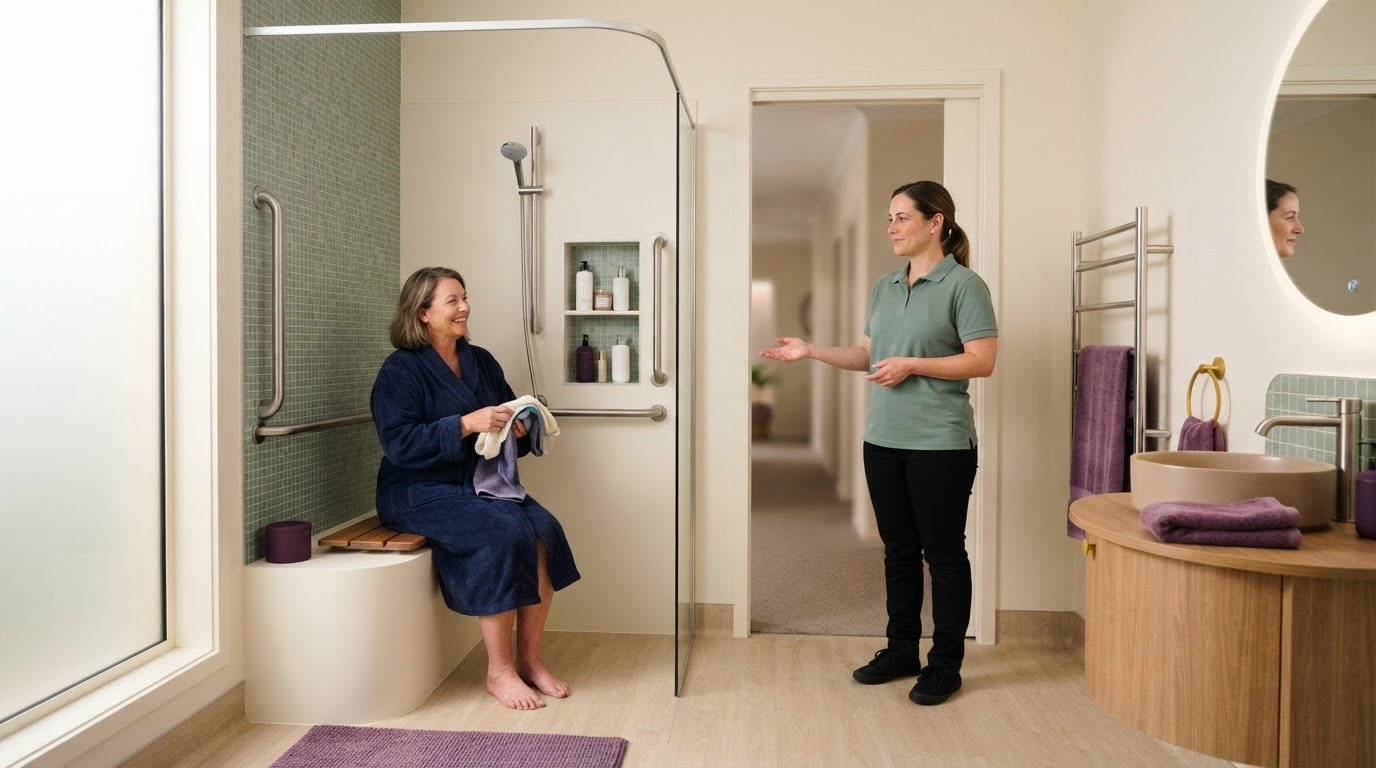
Can someone help with showering without taking over the whole routine? If you’re considering assistance with showering NDIS support, it’s understandable to want practical help while keeping personal choices and privacy firmly in your hands. Having someone new there during such a private part of the day can feel uncomfortable, especially when you’re unsure what the support might involve.
Showering assistance can be shaped around the person, not delivered as a fixed routine. You can talk about what help is wanted, what the participant prefers to do independently, and what would make the routine feel comfortable and respectful. This guide explains the kinds of support a worker may provide and what to discuss when arranging in-home personal care.
At Endeavour Healthcare, we know trust grows through genuine relationships. Manu founded our small team after working as a support worker, with a commitment to familiar, reliable support. As you read, you’ll find practical ways to put the participant’s preferences at the centre and take a considered next step for your family.
Key Takeaways
- Assistance with showering NDIS support can range from prompts and setup help to more hands-on assistance, depending on what the participant wants.
- Make the routine easier to follow by noting preferred timing, toiletries, task order and privacy preferences.
- Talk through how the participant wants support to be offered, including their preferred pace and what they’d like to do independently.
- Review the routine together as needs or preferences change, so the support continues to feel comfortable and personal.
- Learn how Endeavour Healthcare’s family-founded approach aims to make in-home personal care feel familiar and reliable.
What does assistance with showering under the NDIS involve?
Would a little help make shower time easier while still letting you keep the routine that feels familiar? Assistance with showering can be part of personal care at home, shaped around the participant’s preferred level of support. It isn’t a set list of tasks that every person must follow.
One person might want toiletries set out and a reminder about what comes next. Another may prefer help washing, drying or getting dressed. Someone else might manage these steps independently but feel more at ease knowing a support worker is nearby. The participant’s preferences guide the support, and the level of help can differ from one visit to the next.
A useful starting point is to talk through the routine itself. What does the participant already do comfortably? Where would they like a hand, and which parts would they rather manage on their own? Clear answers help make the support practical without turning a personal routine into a one-size-fits-all checklist.
What might a support worker help with during showering?
Support may happen before, during or after a shower, depending on what the participant wants. A worker might set out towels and toiletries, offer a prompt, help with washing or drying, or assist with getting dressed. These are options, not steps everyone needs.
Some participants prefer hands-on help with particular tasks. Others want reminders or nearby support while they do things themselves. Talking through what feels comfortable helps the worker follow the participant’s lead and provide the assistance that suits the moment.
How does showering assistance fit into NDIS personal care?
Personal care means support with everyday activities related to looking after yourself, including hygiene. Showering assistance may be part of this broader daily living support. The National Disability Insurance Scheme (NDIS) provides a wider framework for disability supports, but whether a particular support can be funded depends on the participant’s plan and circumstances.
If you’re looking into assistance with showering NDIS support, don’t assume every plan covers the same things. Review the plan and consider how the participant’s daily living needs relate to their available supports. For a broader look at everyday help at home, see our guide to NDIS assistance with daily living.
Before support begins, describe the routine in simple terms: what the participant likes done first, which items they use and where they prefer privacy. This gives the worker a clear sense of how to help while leaving the participant in control of their own routine.
How can showering support protect dignity, choice and independence?
Accepting help with showering doesn’t mean handing over control of the routine. The participant can guide what happens, from how much assistance they want to the pace that feels comfortable. A support worker’s role is to follow those preferences, not automatically take over.
For families arranging assistance with showering NDIS support, it helps to discuss small details that matter. Does the participant prefer a quiet approach, an explanation before each step, or for the worker to wait nearby? Their choices may vary from day to day, so a familiar way to communicate can make it easier to say what feels right in the moment.
What does privacy and consent look like during personal care?
Before beginning a part of the routine, a worker can check what help the participant wants. That might mean asking before assisting with washing or dressing, explaining what they’re about to do, or pausing so the participant can respond. The right approach depends on the person and the household.
Agreeing on words, gestures or another way to communicate can help someone express “yes”, “not yet” or “I’d rather do this myself”. A calm check-in gives the participant space to guide the support rather than feel rushed through an intimate task.
Respectful personal care starts with listening, then follows the participant’s choices one step at a time.
Can showering support help you keep doing things for yourself?
Support can be arranged around the parts of the routine the participant wants to do themselves. For example, a worker might set out a towel and toiletries, then leave time for the person to wash independently. If they want help with another step, they can say so.
That balance can look different for each person and change from visit to visit. Some days a participant may prefer a reminder; on another day, they may ask for more hands-on help. Support should reflect what they say they want, rather than assuming one approach always fits.
If you’re discussing in-home personal care, describe the participant’s preferred pace and the tasks they want to manage. You can also agree how the worker should check in, what privacy means to the participant, and how they can ask for a pause or a change. These details turn personal preferences into useful guidance for the routine.
At Endeavour Healthcare, we shape personal care around the person and their everyday goals. If you’re supporting a family member, including them in the conversation helps make sure their preferences are heard directly. You don’t need to have every detail worked out before talking it through. Start with what would make shower time feel more comfortable and respectful for them.
Is NDIS showering assistance only for people who cannot shower alone?
No. You don’t need help with every step of showering to find some support useful. A participant might manage most of their routine independently but want a hand with one part, or prefer support only on certain days.
Needs can vary across the routine and over time. A person may feel comfortable with one task but want help with another, or find their preferences change depending on how they’re feeling that day. There’s no single level of support that suits everyone, and needing some help doesn’t mean you need full assistance.
For families considering assistance with showering NDIS support, start with the participant’s own account of what’s working and what they’d like help with. A diagnosis alone doesn’t describe someone’s personal routine or preferences. Be specific about the task rather than assuming what a person needs based on a label.
What if you only need help with part of your shower routine?
You might manage getting into the shower and washing independently but want help preparing the bathroom first. Or you may be comfortable with most of the routine but prefer assistance with a particular step afterwards. Support can focus on one part without taking over the whole activity.
Try describing what the participant does themselves, what they’d like help with and whether that changes from day to day. Specific examples make a conversation about support more practical. They also keep the focus on the participant’s stated needs, rather than assumptions about what someone with a particular disability should need.
How does your NDIS plan relate to personal care support?
Whether showering support can be funded depends on the participant’s individual plan and the NDIS rules that apply. Don’t assume a particular support is covered just because it’s personal care, or that a diagnosis automatically means funding will be available. Check the plan and consider how the participant’s everyday support needs relate to their goals.
It may help to write down the tasks where assistance is wanted and how often support would be useful. Keep the description grounded in daily life: what the participant wants to do, where they’d like a hand, and what they hope the support will make easier. These details can help you have a clearer conversation about the plan without promising a funding outcome.
Showering is one part of support at home. If you’re looking at how different kinds of help fit into a participant’s everyday life, our guide to in-home support for NDIS participants offers a broader overview.
Start with the participant’s words. What would they like to manage on their own, and where would they welcome support? That conversation can help you describe what’s needed clearly while keeping their preferences at the centre of any next steps.

How can you plan a showering support routine that feels right?
A few clear notes can make it easier to explain what a participant wants from showering support. You don’t need to plan every moment in advance. Start with the routine they already follow, then talk through which parts they’d like to keep doing and where help would be welcome.
These steps can help you prepare a practical conversation:
- Describe the usual routine. Note the order of tasks and the pace the participant prefers.
- Identify the help they want. Be specific about tasks they manage themselves and where they’d welcome a prompt or assistance.
- Share communication preferences. Explain whether they prefer reminders, a quiet approach or a brief explanation before each step.
- Review it together. Check whether the routine still suits the participant and update it when their preferences change.
Small details can make a routine feel familiar. You might write down the preferred time of day, which toiletries the participant likes to use, the order they prefer for getting ready, or how much privacy they want. These notes are a helpful guide, not a script the participant has to follow every time.
What should you tell a support worker about your routine?
Invite the participant to explain their usual steps in their own words, including which parts they like to do independently. They might prefer a reminder at one point, a slower pace or quiet while they get ready. Share practical preferences that help the routine feel comfortable, without pressuring them to disclose personal details they’d rather keep private.
Instead of saying only “help with showering”, you could explain that the participant likes their toiletries set out in a particular order, then prefers time to complete the next step themselves. A clear description gives the worker useful guidance while leaving room for the participant to say what they want on the day.
How can families help the participant lead the conversation?
Speak directly with the participant and give them time to answer, rather than assuming you need to speak for them. If it’s easier, help them write down their preferences or communicate them in another way that works for them. Keep them involved when the routine is discussed or changed, wherever possible.
Preferences may shift, so a brief check-in can help you notice what’s working and what the participant would like to adjust. They may want a different order for a task, more time or less prompting. Treat their feedback as practical guidance, not as a problem to solve for them.
Planning assistance with showering NDIS support can be as simple as listening, writing down useful details and sharing them with the worker. If you’d like to talk through arranging in-home personal care, Endeavour Healthcare can help you explore support shaped around the participant’s routine and preferences.
How does Endeavour Healthcare make showering support personal?
Showering is private, so personal care needs to fit the participant rather than follow a preset routine. Endeavour Healthcare provides in-home personal care shaped around each person’s real life and goals. We take time to understand what they want support to look like and what matters to them in their own home.
That starts with the participant’s perspective. They can explain what feels comfortable, which parts of showering they want to manage themselves and where they’d welcome assistance. Families can share helpful context too, while keeping the participant involved in decisions about their care.
What does a familiar, person-centred approach feel like?
It means taking time to understand how the participant wants support to work, then treating their preferences as individual rather than fitting them into a standard routine. They may want a worker to check before offering help, allow time for a task or follow a particular order. Those details help shape personal care around the person.
As support continues, an open conversation gives the participant a way to share what feels right and what they’d like to change. The aim is to provide help that respects their choices and feels connected to their everyday life, not like a task being done to them.
For example, a participant might want support to begin only after they’ve had a chance to explain what they need that day. Another may prefer the worker to follow a simple set of instructions they’ve agreed on together. The important thing is to make space for the participant’s own voice and preferences.
What is a simple next step for you or your family?
Start by talking with the participant about what they would like help with and what they prefer to do themselves. You could note the parts of the routine they want to keep familiar, along with anything they’d like a worker to understand. There’s no need to have every detail settled before you begin.
You can then discuss how in-home personal care might fit into the participant’s day and goals. Keep the conversation focused on what they want support to look like, and take time to consider the options together. Funding depends on the participant’s plan and circumstances, so a conversation about support doesn’t guarantee a particular outcome.
If you’re considering assistance with showering NDIS support, you’re welcome to talk with Endeavour Healthcare about in-home support. Share what your family is looking for and what would help the participant feel heard and respected. You can take the next step at a pace that feels comfortable.
Let the next step begin with what matters most
A useful next step can be a simple conversation with the participant about what would make support feel right for them. Give them space to share their priorities in their own way, and let those priorities shape what you discuss as a family.
If you’re considering assistance with showering NDIS support, bring that conversation into a discussion about in-home personal care. You don’t need to speak for the participant if they can share their views themselves. Listening together can help keep their wishes central as you consider what comes next.
Every family’s circumstances are different. A warm, straightforward conversation can help you explore support that fits the participant’s everyday life, without pressure to make decisions before you’re ready. Talk with Endeavour Healthcare about personal care support and take the next step at a pace that feels comfortable for you.
With the participant’s voice leading the way, you can approach the conversation with care and confidence.
Frequently Asked Questions
Is assistance with showering covered by the NDIS?
NDIS funding may cover showering assistance when it aligns with the participant’s plan and applicable NDIS rules, but it isn’t automatic. Check the plan for relevant supports and available funding, then discuss the specific help needed with the participant’s NDIS contact or support coordinator. Describe the tasks and how they relate to everyday life; a provider’s general service description doesn’t confirm funding.
Can I receive NDIS showering support if I can do some tasks myself?
Yes. You can seek support for selected parts of showering rather than asking a worker to do the whole routine. For instance, you might want help preparing items or getting dressed while preferring to wash independently. Describe the exact task and when help is useful. The participant’s plan and funding still determine whether that support can be paid through the NDIS.
How often can a support worker help with showering?
There’s no single number of visits that applies to everyone. Frequency depends on the participant’s needs, preferences, plan and the supports they can use. You might discuss whether help is wanted on particular mornings, only when circumstances change, or as part of a regular routine. Be clear about the pattern you’re seeking, then review it if the participant’s circumstances or preferences shift.
Can showering assistance include help with getting dressed?
Yes, showering support may include help getting dressed if that’s part of the assistance the participant wants and it fits their plan. They might ask for help with particular clothing items, setting clothes out or managing a step after drying. Explain what they’d like help with and what they prefer to do themselves. That makes it easier to discuss the routine without assuming everyone needs the same tasks.
What if I feel uncomfortable receiving personal care from a support worker?
Feeling unsure is understandable, and you can say so before support begins. You might prefer to meet the worker first, explain what helps you feel comfortable or agree on a simple way to ask for a pause. You can also start by discussing the routine without deciding every detail straight away. A respectful conversation should make room for your boundaries, and you can raise concerns if the arrangement doesn’t feel right.
Can a family member be involved in planning my showering support?
Yes, a family member can help explain routines or share details you find hard to communicate, if you want them involved. You can decide whether they join the first conversation, help write down preferences or support you beforehand. Where possible, keep questions directed to you and check you’re comfortable with what’s shared. Your views should remain part of planning, even when a family member helps you express them.
Do I need an occupational therapy assessment to receive showering assistance?
Not necessarily. An occupational therapy assessment isn’t automatically required for every request for showering assistance; what information is needed can depend on your circumstances and the NDIS decision being considered. If an assessment has been requested, ask what question it needs to address and how the information will be used. You can also check your plan or speak with your NDIS contact about the next step.
Leave a Reply